
Mao Zedong (People Who Made History)
ISBN: 073771493X
Author: C.J. Shane
Publisher: Greenhaven Press
Rating: 3.00
Read NowDownload Book
- Presents the most important 20th century criticism on major works from The Odyssey through modern literature
- The critical essays reflect a variety of schools of criticism
- Contains critical biographies, notes on the contributing critics, a chronology of the author's life, and an index
- Introductory essay by Harold Bloom
Long out of print, Charlotte Perkins Gilman’s novel The Crux is an important early feminist work that brings to the fore complicated issues of gender, citizenship, eugenics, and frontier nationalism. First published serially in the feminist journal The Forerunner in 1910, The Crux tells the story of a group of New England women who move west to start a boardinghouse for men in Colorado. The innocent central character, Vivian Lane, falls in love with Morton Elder, who has both gonorrhea and syphilis. The concern of the novel is not so much that Vivian will catch syphilis, but that, if she were to marry and have children with Morton, she would harm the "national stock." The novel was written, in Gilman’s words, as a "story . . . for young women to read . . . in order that they may protect themselves and their children to come." What was to be protected was the civic imperative to produce "pureblooded" citizens for a utopian ideal.Dana Seitler’s introduction provides historical context, revealing The Crux as an allegory for social and political anxieties—including the rampant insecurities over contagion and disease—in the United States at the beginning of the twentieth century. Seitler highlights the importance of The Crux to understandings of Gilman’s body of work specifically and early feminism more generally. She shows how the novel complicates critical history by illustrating the biological argument undergirding Gilman’s feminism. Indeed, The Crux demonstrates how popular conceptions of eugenic science were attractive to feminist authors and intellectuals because they suggested that ideologies of national progress and U.S. expansionism depended as much on women and motherhood as on masculine contest.
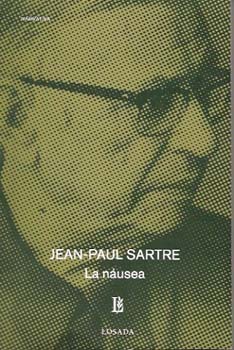
Nausea is the story of Antoine Roquentin, a French writer who is horrified at his own existence. In impressionistic, diary form he ruthlessly catalogs his every feeling and sensation. His thoughts culminate in a pervasive, overpowering feeling of nausea which “spreads at the bottom of the viscous puddle, at the bottom of our time—the time of purple suspenders and broken chair seats; it is made of wide, soft instants, spreading at the edge, like an oil stain.”
Winner of the 1964 Nobel Prize in Literature (though he declined to accept it),Jean-Paul Sartre, philosopher, critic, novelist, and dramatist, holds a position of singular eminence in the world of French letters. La Nausée, his first and best novel, is a landmark in Existential fiction and a key work of the twentieth century.
