The Paris Commune: French Politics, Culture, and Society at the Crossroads of the Revolutionary Tradition and Revolutionary Socialism
Novel Romance novel romance indonesia novel romance online short story romance novel romance mac a novel romance trailer novel romantis indonesia novel romance hallmark cast novel romance movie Read Books, AudioBooks, Download Books, Ebook Pdf, Donload Ebook pdf, Audio Ebooks, Read Books Free, Free Ebooks Novel Download, AudioBooks, Download Books, Novel Ebooks, Novel Read Books, Novel Audiobooks, Romance Books, Horor Books, History Books, Advanture Books, Photography, Biography Books


In 1979 two events occurred that would shape the next twenty-five years. In America and Britain, an era of weary consensus was displaced by the arrival of a political marriage of fiery idealists: Ronald Reagan and Margaret Thatcher transformed politics with a combination of breezy charm and assertive "Victorian values." In Iran, the fundamentalist cleric Ayatollah Ruhollah Khomeini set out to restore a regime that had last existed almost 1,300 years ago. Between them they succeeded in bringing the twentieth century to a premature close. By 1989, Francis Fukuyama was declaring that we had now reached the End of History.
What colonized the space recently vacated by notions of history, progress and reason? Cults, quackery, gurus, irrational panics, moral confusion and an epidemic of idiocy, the proof of which was to be found in every state, every work-place, and every library. In Idiot Proof, columnist Francis Wheen brilliantly evokes the key personalities of the post-political era—including Princess Diana and Deepak Chopra, Osama bin Laden and Nancy Reagan's astrologer—while lamenting the extraordinary rise in superstition, relativism and emotional hysteria over the past quarter of a century.
In turn comic, indignant, outraged and just plain baffled by the idiocy of it all, Idiot Proof is a masterful depiction of the daftness of our times and a plea that we might just think a little more and believe a little less.

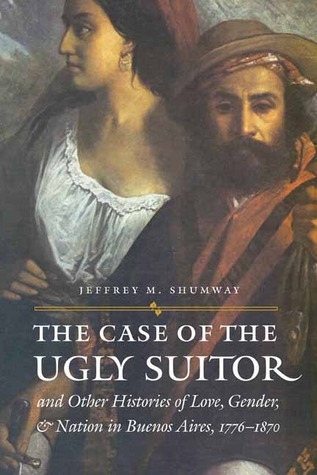
In 1840 Gumerscindo Arroyo hoped to marry Francisca Canicoba, but her father forbade it. Consequently, Francisca took her father to court for permission to marry, where he objected on the grounds that Arroyo was simply too ugly. In the courtrooms of nineteenth-century Buenos Aires, children battled parents in order to fulfill their romantic desires and marry the mate of their choice. Parents and guardians also struggled for custody of young children, which some did out of love while others were greedy for child labor. In courtrooms and elsewhere, women challenged their traditional status as social and intellectual inferiors. Though all these struggles existed in earlier times, the nineteenth century injected a new dynamic into such conflicts: Argentina’s revolution against Spain and the subsequent attempts by political and intellectual leaders to craft a new nation out of the vestiges of Spanish colonialism. The family, many leaders recognized, was the vital building block of the nation. Hence, matters of the heart and hearth intertwined with matters of the state. Examining family conflicts and the political and legal backdrop of those cases reveals strong continuities in attitudes about gender and family. At the same time, ideological influences of the revolutionary movement combined with the practical needs of nation building to create new freedoms and new identities for women and children over the course of the nineteenth century. The Case of the Ugly Suitor brings these family and national struggles to life, many times in the words of the participants themselves.